
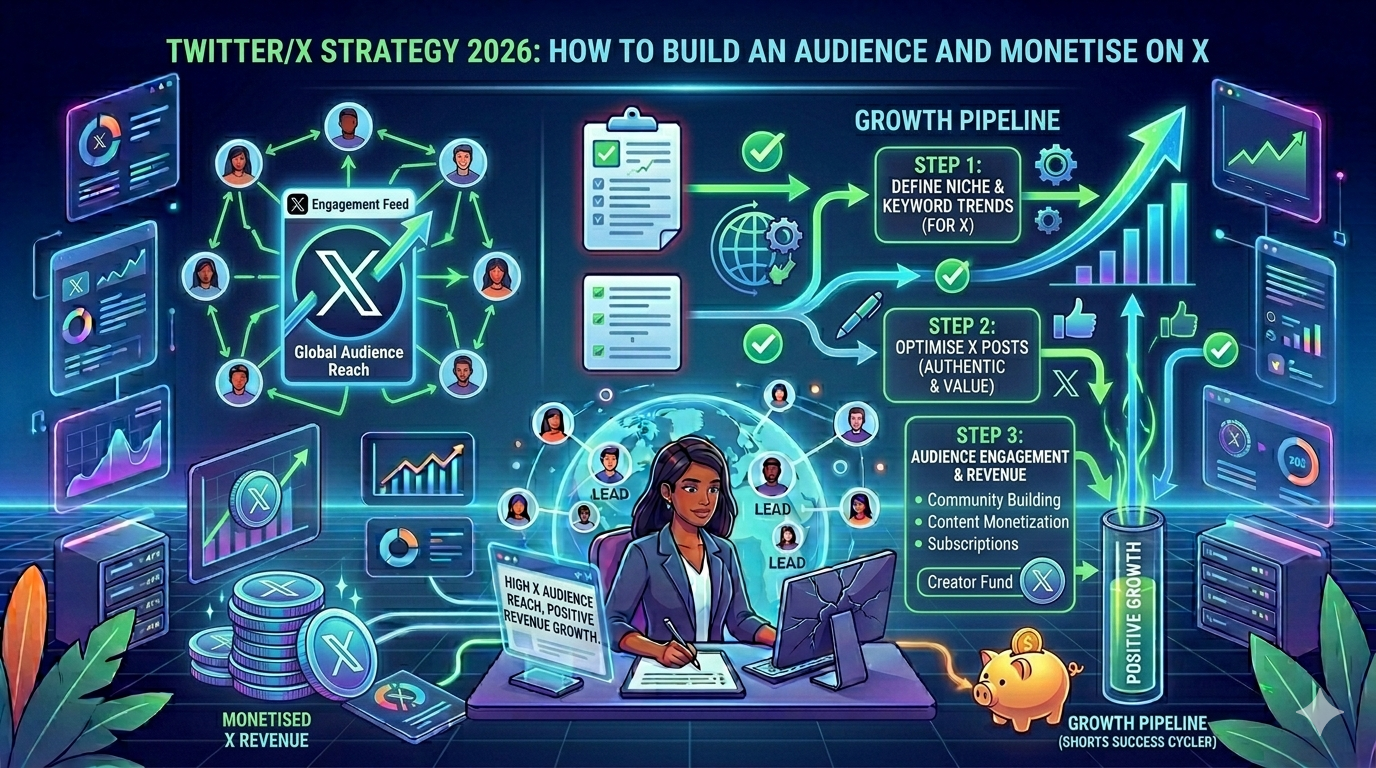
Twitter/X in 2026: Resurgent and Rewarding for Creators
After a turbulent 2023–2024 period of significant platform changes under its new ownership, X (formerly Twitter) has stabilised in 2026 with a refined creator ecosystem that is generating meaningful income for a growing number of content creators. Monthly active users have recovered and the platform’s text-first format continues to attract audiences interested in real-time commentary, industry discourse, and thought leadership.
X in 2026 is not for every creator — but for specific content types and audience demographics, it offers organic reach and monetisation opportunities that are underutilised by creators still focused exclusively on Instagram and TikTok.
The X Algorithm in 2026: What You Need to Know
X’s recommendation algorithm in 2026 prioritises several signals significantly different from other platforms:
- Replies and quote posts are weighted more heavily than likes — content that sparks genuine conversation is rewarded disproportionately
- Premium subscriber status (X Premium) provides an algorithmic boost to posts — not a shortcut to virality but a consistent incrementally higher reach for the same content quality
- Media content (images, video) receives higher reach than text-only posts — a shift from X’s text-first origins toward a mixed-media approach
- Recency is weighted more heavily on X than on any other major platform — the half-life of a post on X is measured in hours, not days
Writing Posts That Perform on X in 2026
The most effective X post formats in 2026:
The Opinion Thread
Take a nuanced position on a topic in your niche. Write a thread (5–10 connected posts) that develops the argument across multiple posts. The first post must be compelling enough to drive “show this thread” clicks. Threads consistently outperform single posts for follower acquisition on X.
The Counterintuitive Single Tweet
One sentence that challenges a conventional wisdom in your niche. Specific, not vague. “The reason most Instagram accounts stop growing at 10K is not their content quality. It is their caption strategy.” This format drives replies from both agreement and respectful disagreement — both expand reach.
The Data Point
Share a specific, surprising statistic from your field with brief context and your interpretation. “TikTok captions with a question at the end generate 47% more comments than those without. Three years of client data. Are you still ending your captions with ‘Hope this helps’?” Data posts drive saves and quote posts — two of the highest-reach signals on X.
X Monetisation Options in 2026
- Creator Ads Revenue Sharing: X shares ad revenue with eligible creators on replies to their posts. Requires 5M impression views in 3 months and 500 followers minimum.
- Subscriptions: Creators can charge followers for access to exclusive content directly through X. Some niche creators generate $5,000–$15,000 monthly from X subscriptions alone in 2026.
- Promoted Posts: Brands pay for direct promotion through creator accounts — X’s version of influencer marketing.
FAQ: Twitter/X Strategy 2026
Is X still worth investing in for creators in 2026?
For the right creator — yes. X is most valuable in 2026 for thought leaders, industry commentators, news-adjacent creators, and those whose audience skews toward professionals, investors, and tech-forward demographics. For lifestyle, food, and beauty creators, the time investment in X typically delivers lower returns than the same effort on Instagram or TikTok.
How many hashtags should I use on X in 2026?
1–2 maximum. X’s algorithm in 2026 actively deprioritises posts with multiple hashtags, classifying them as lower-quality promotional content. Use one hashtag integrated naturally into the post body rather than as a cluster at the end.
Should I get X Premium in 2026?
For creators focused on X as a primary platform, the algorithmic reach boost and ad revenue eligibility from X Premium provides positive ROI once your account generates more than approximately 200K monthly impressions. Below that level, the subscription cost is difficult to justify from revenue alone.